Does going to the moon still matter?

Loading player...
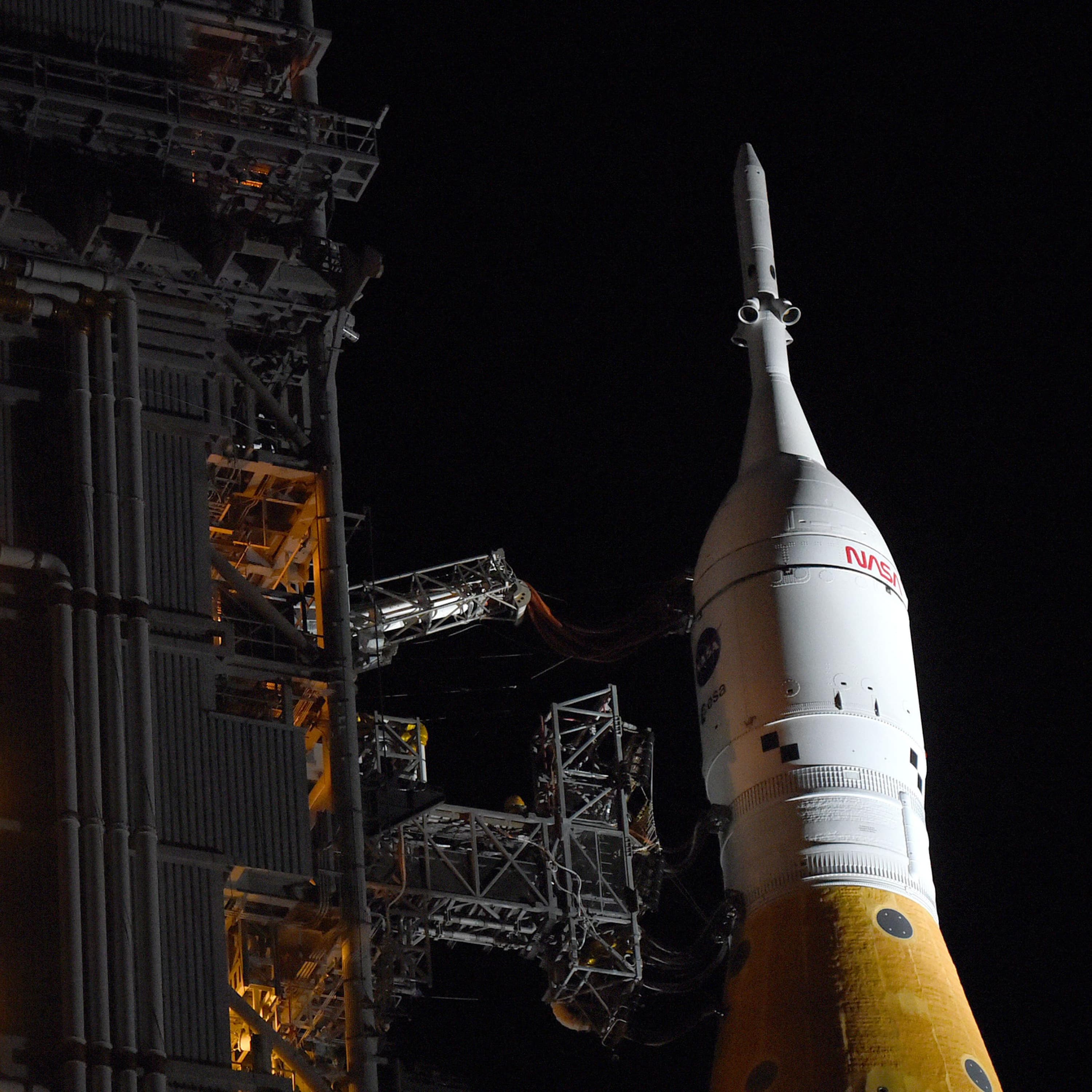
If all goes to plan, Artemis II, Nasa’s mission to return humans to the moon, will launch this week. The mission will mark the farthest that humans have travelled from Earth, and the first return to the moon in more than 50 years. It will also pave the way for landing on the moon again as soon as 2028. But given the Apollo missions have already achieved that feat, does going back to the moon still matter today? To find out, Madeleine Finlay hears from the Guardian’s science editor, Ian Sample, the Atlantic journalist Ross Andersen, and Jan Wörner, a former director general of the European Space Agency. Help support our independent journalism at theguardian.com/sciencepod
31 Mar English United Kingdom Science · Nature

Other recent episodes

‘These risks are real’: the threat of AI bioweapons

In his annual speech on threats to the nation, Sir Ken McCallum, the head of the UK’s intelligence service, MI5, warned that AI had the potential to ‘change the stakes’ on existing and even new bioweapons. To find out why, and how, Ian Sample speaks to Dr Tom Inglesby, director…
20 Oct 15 min

Is your boss watching you? The rise of AI surveillance at work

Workers have always been monitored by their bosses, first through output targets, and then via computer software labelled ‘bossware’. But AI is transforming the capabilities of these systems, processing huge volumes of data to provide minute-by-minute accounts of activity, and productivity. To find out more, Ian Sample hears from UK…
15 Oct 17 min

The surprising psychology of morbid curiosity

US defence secretary Pete Hegseth’s plan to livestream the execution of Nidal Malik Hasan has incurred condemnation from human rights groups and politicians on all sides. But according to Coltan Scrivner, an author and psychologist at Arizona State University and expert on morbid curiosity, people are still likely to watch…
13 Oct 17 min

All the news and science from the 2026 Nobel prizes

This year’s Nobel prizes in chemistry, physics and physiology or medicine have celebrated work that has been used to develop countless drugs and transform modern medicine, allowed physicists to observe one of the most mysterious particles, and provided a tool that could act as an on/off switch for brain cells…
7 Oct 23 min

Today in Focus: should we be worried about a plague outbreak?

Quarantine measures have been in place in several hospitals in eastern Russia since a 28-year-old laboratory worker, Darya Shipilova, died after falling ill at work following a reported accident at a plague research centre in Siberia. Russia’s health watchdog has said she died of ‘pneumonia of unknown aetiology’, but there…
6 Oct 13 min